
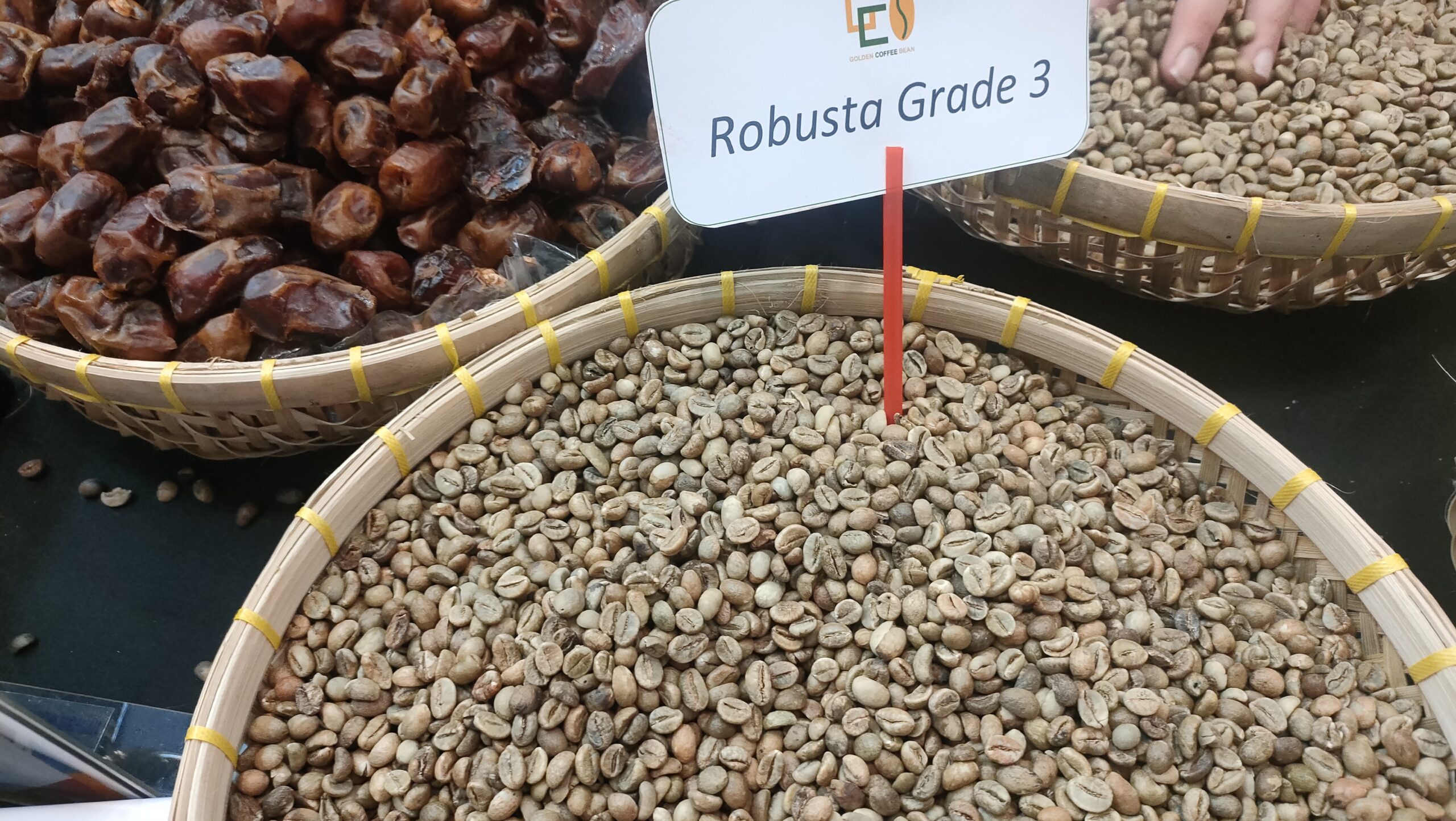
We finally here. Welcome to the world’s 14 february day in love of Valentine day and we call
☕ Love in Every Cup: Coffee, Valentine’s Day, ICE Robusta Data, Farmer Price Expectations & Climate Impacts
By admin
On Valentine’s Day 2026, lovers and coffee enthusiasts alike are celebrating romance in a cup — steaming espresso shots, rich robusta blends, and sweet coffee moments shared across cafes and homes. This year, the joy of coffee is intertwined not just with romance, but also with the economic heartbeat of the coffee market, farmer expectations at origin, and the very climate shaping the global harvest.
❤️ 1. Valentine’s Day & the Romance of Coffee Sales
Valentine’s Day has become an important calendar date for coffee retail. Cafés offer special blends, roasters release limited-edition gifts, and many consumers choose coffee-related presents over traditional chocolates and flowers. Coffee shops report higher foot traffic and unique seasonal menus that celebrate love and connection — turning consumer affection for coffee into a market opportunity.
Coffee is more than a drink this February 14; it’s a symbol of shared moments and warmth — and sales generally see noticeable boosts as people buy specialty drinks, beans, and coffee experiences as expressions of affection.
📈 2. ICE Robusta Futures: The Market’s Pulse
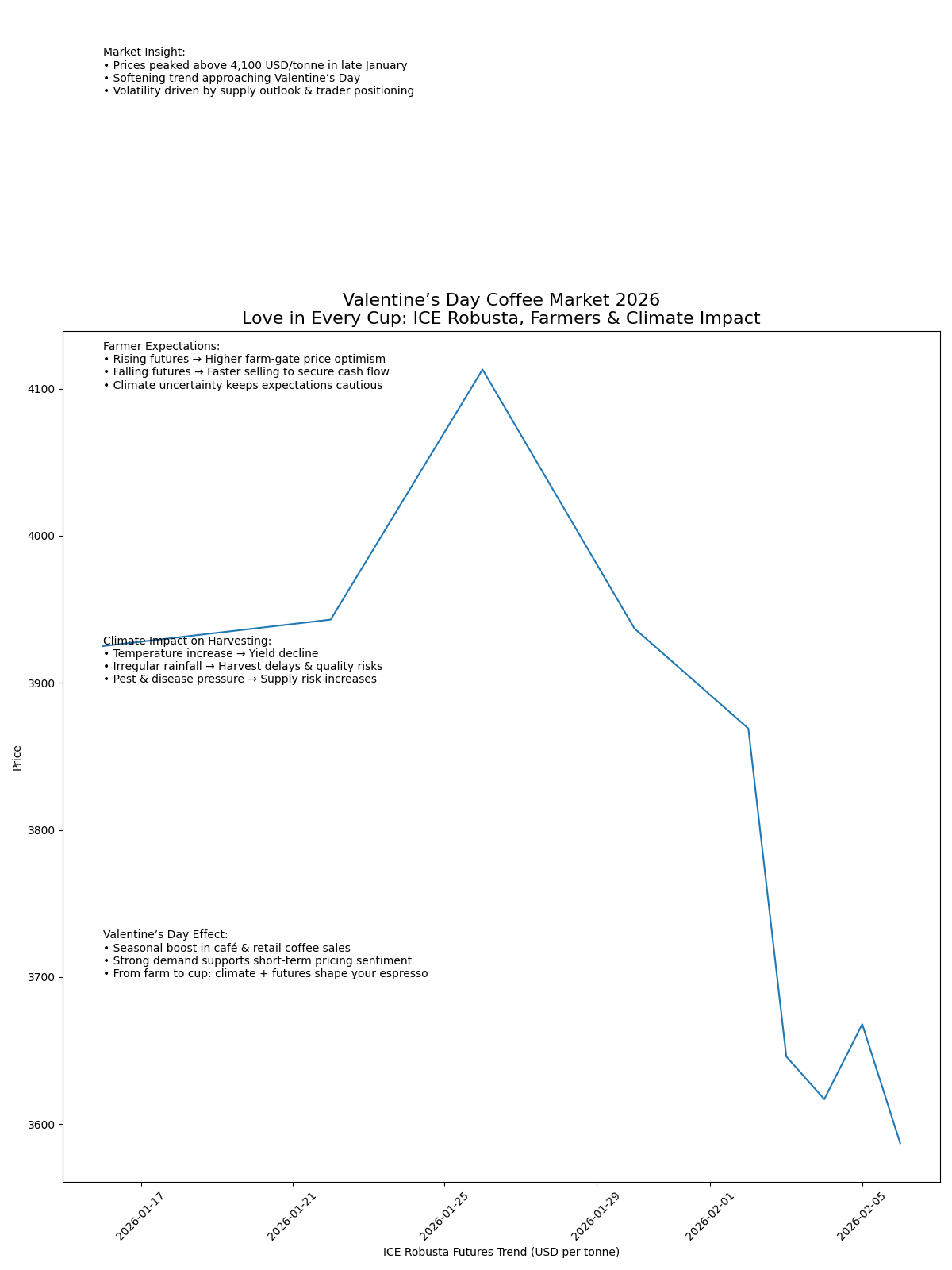
The Intercontinental Exchange (ICE) Robusta Coffee Futures serve as a global benchmark in pricing physical robusta beans — the backbone of many espresso and instant coffee blends. ICE Robusta futures reflect global supply and demand expectations for upcoming harvests.
As of mid-February 2026, the March 2026 robusta contract on ICE London has been trading in the range of about $3,700–$3,900 per tonne, showing modest strength following recent lows. These price movements signal renewed buying interest from roasters as inventories remain relatively low and traders adjust to production forecasts.
The shifting futures prices matter because:
- Higher futures can signal tighter supply or stronger demand.
- Lower futures may reflect expectations of abundant harvests — or risk-off trading sentiment.
For coffee product makers and roasters, these futures influence contract pricing and purchasing decisions long before beans reach a roasting plant.
🌾 3. Farmers’ Price Expectations Amid Market Realities
For coffee farmers — the growers in Vietnam, Indonesia, Brazil, and other producing nations — ICE Robusta futures offer a reference point for price expectations at the farm gate, even though actual local prices often differ due to logistics, quality, and domestic demand.
Across Indonesian coffee regions like Lampung and Aceh, robusta prices at the farm level have varied widely: some farmers recently saw prices around Rp70,000–Rp95,000 per kilogram for quality beans during the 2025 harvest. Meanwhile, in other areas like Jember and Kerinci, prices have dipped to as low as Rp48,000–Rp50,000 per kg when supply surged or quality was lower.
This volatility shapes growers’ expectations:
- When futures and local prices rise, farmers may delay selling while anticipating higher returns.
- When prices drop or harvests flood the market, farmers may be compelled to sell quickly, even at lower prices, to cover immediate costs.
Price expectations are also influenced by demand signals — including seasonal consumption spikes like those around Valentine’s Day — because stronger retail demand can support stronger forward pricing.
🌦️ 4. How Climate Is Impacting Coffee Harvesting
Climate remains a defining force in coffee economics. Weather variability — from droughts to heavy rain — directly impacts crop yields and quality, especially for robusta coffee.
In Vietnam, prolonged rains and storm systems have delayed harvesting and drying operations in key coffee-producing provinces, slowing down pickers and potentially affecting bean conditions later in processing. However, traders have also interpreted harvest forecasts and export data as showing comfortable supply, which has weighed on prices even as weather disrupts fieldwork.
Elsewhere, irregular rainy seasons and heat stress have been linked to uneven flowering and cherry development, which can reduce harvest volume and coffee quality — ultimately contributing to cyclical price shifts on futures markets.
Climate impacts are cascading:
- Yield risk: Extreme weather can reduce the amount of harvestable cherry.
- Quality risk: Weather-induced defects affect grade and export value.
- Timing risk: Delays in harvesting or drying can bottleneck logistics and affect when beans hit the market.
These realities force farmers to adapt — whether through crop management practices, irrigation investments, or choosing harvest timing — while also balancing market price expectations shaped by futures and domestic demand.
☕ 5. From Field to Valentine’s Cup — A Market Synthesis
This Valentine’s Day, as couples toast with rich robusta espresso or enjoy a cozy latte, it’s important to remember that each cup represents a complex interplay:
Climate uncertainties — the environmental forces that can make or break harvests and influence how robusta beans flow into global markets.
Consumer sentiment and seasonal sales — the joy and romantic appeal that drive demand.
Market fundamentals — reflected in ICE Robusta futures that communicate supply and demand expectations.
Farmer realities — where crop conditions, local prices, and expectations shape livelihood decisions.
Blog
This section provides an overview of the blog, showcasing a variety of articles, insights, and resources to inform and inspire readers.

One response
Hi, this is a comment.
To get started with moderating, editing, and deleting comments, please visit the Comments screen in the dashboard.
Commenter avatars come from Gravatar.